

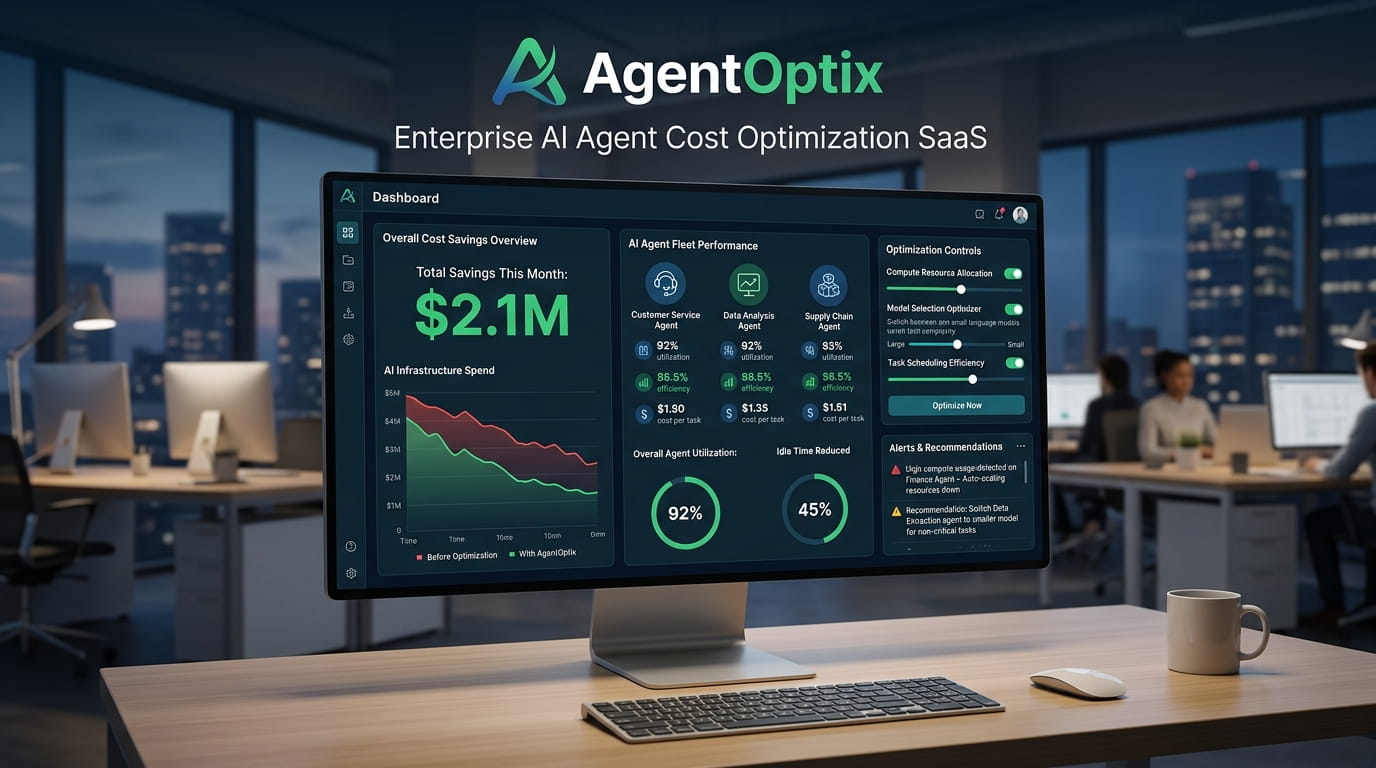
The AI SaaS pricing strategy decisions being made in boardrooms right now will determine which vendors survive the next consolidation wave — and which enterprise buyers overpay by millions. Seat-based licensing, the revenue backbone of SaaS for two decades, is collapsing under the weight of AI agents that work autonomously, around the clock, without a human seat attached. Enterprise technology leaders in the US, UK, Canada, and across global markets are urgently re-evaluating their vendor contracts and internal build-vs-buy frameworks as a direct consequence.
This pillar guide maps the full landscape: why the old model is breaking, what consumption-based SaaS pricing actually means in practice, how leading AI-native vendors are structuring their tiers, what the financial exposure looks like for enterprise buyers, and how you should be repositioning your own SaaS stack or product pricing before 2027.
Why the Seat-Based Pricing Era Is Ending for AI-Native SaaS
For most of SaaS history, pricing was elegantly simple: count the humans, multiply by a monthly rate, add an enterprise support tier, and call it a deal. Salesforce, Workday, HubSpot, and hundreds of others built multi-billion-dollar businesses on this model. It worked because software was fundamentally a human productivity tool — one license, one user, one seat.
AI agents break this model structurally. An AI agent does not occupy a seat in any meaningful sense. A single enterprise deployment of an agentic workflow might execute 400,000 tasks per month across procurement, finance reconciliation, customer support escalation, and compliance monitoring — none of which maps to a named user. Charging per-seat for that workload is economically incoherent for both the vendor and the buyer.
According to Andreessen Horowitz’s 2025 State of AI report, the fastest-growing AI SaaS companies in their portfolio had already moved away from seat-based models by Q3 2025, replacing them with token consumption, API call volume, outcome-based milestones, or hybrid structures. The structural shift is not theoretical — it is already priced into the revenue models of the next generation of enterprise vendors.
The implications for enterprise procurement teams are significant. A contract negotiated on seat logic against an AI-native vendor is effectively unenforceable as a cost control mechanism. Usage can — and routinely does — scale by 10x to 50x once AI agents are embedded in production workflows. Without consumption guardrails, that is a budget exposure, not a productivity gain.
The Five Primary Models Inside a Modern AI SaaS Pricing Strategy
Understanding the taxonomy of current pricing structures is the essential first step for any enterprise buyer or SaaS founder building their go-to-market model. These five models are not mutually exclusive — most mature AI SaaS vendors now operate hybrids.
1. Token-Based Consumption Pricing
The LLM-native default. Customers are billed per token processed — input tokens for context and instructions, output tokens for generated responses. OpenAI’s API, Anthropic’s Claude API, and Google’s Gemini enterprise offering all use this structure at the foundation level.
Enterprise buyer implication: Token costs are highly compressible with prompt engineering, caching strategies, and model-tier selection. Enterprises that invest in AI infrastructure optimisation (see: Multi-Agent Orchestration System Design) can reduce effective token spend by 40–70% without degrading output quality.
Typical enterprise rate: $10–$60 / £8–£47 / €9–€54 per million output tokens, depending on model tier and volume commitment.
2. Outcome-Based or Success-Fee Pricing
The most disruptive structure in the current market. Vendors charge based on verifiable business outcomes — resolved support tickets, closed deals influenced, contracts reviewed, anomalies detected. Companies like Klarna’s AI vendor ecosystem and several agentic coding platforms have piloted outcome pricing at scale.
Enterprise buyer implication: Aligns vendor incentive with enterprise result. Significantly harder to audit and creates measurement disputes at contract renewal. Requires clean data infrastructure and agreed KPI definitions before signature.
Typical range: $0.50–$8.00 / £0.40–£6.30 / €0.45–€7.20 per resolved outcome, tiered by complexity.
3. Resource-Unit Consumption (CPU/GPU-Hour)
Common in infrastructure-layer AI SaaS — GPU cloud, vector database platforms, AI model fine-tuning services. Customers purchase compute in advance or pay variably per hour of GPU utilisation.
Enterprise buyer implication: Predictable in isolation but highly sensitive to workload spikes. Requires FinOps discipline and real-time cost monitoring dashboards. Aligns closely with the SaaS infrastructure news decisions around cloud provider lock-in and multi-cloud strategy.
Benchmark cost: $2.50–$6.00 / £2.00–£4.70 / €2.25–€5.40 per A100 GPU-hour on major platforms (AWS, Azure, GCP) at standard on-demand rates.
4. Workflow or Agent Execution Pricing
Emerging as the dominant model for agentic SaaS platforms (automation, RPA with AI, autonomous coding). Customers are charged per agent run, per workflow execution, or per workflow-minute. Platforms like n8n Enterprise, Zapier AI, and several vertical AI-agent vendors use execution-based structures.
Enterprise buyer implication: Execution counts can be metered, budgeted, and capped. More governance-friendly than pure token consumption. Watch for “minimum execution” commitments that create floor costs regardless of usage.
Typical pricing: $0.005–$0.08 / £0.004–£0.063 / €0.0045–€0.072 per execution, with enterprise volume discounts from 100,000+ executions per month.
5. Hybrid Seat + Consumption
The transitional model used by legacy SaaS vendors adding AI capabilities to existing platforms. A baseline platform fee (often seat-based or flat) covers the core product, with a consumption meter running separately on AI feature usage. Microsoft Copilot 365, Salesforce Einstein, and Workday AI all operate variants of this model.
Enterprise buyer implication: Creates dual budget exposure — the legacy seat cost plus unpredictable AI usage charges. Often the most expensive structure over a 3-year total cost of ownership horizon for high-utilisation enterprises.
Consumption-Based SaaS Pricing: The Architecture That Changes Everything
Consumption-based SaaS pricing is not merely a billing preference — it is an architecture decision that cascades through your vendor contracts, your internal cost allocation frameworks, your FinOps team’s tooling, and your engineering team’s design choices.
The Three-Layer Consumption Model
The most sophisticated AI SaaS vendors now operate a three-layer consumption architecture:
Layer 1 — Ingestion: Cost per data token or document page processed into the AI system. Often the lowest-cost layer but can become significant at enterprise data volumes.
Layer 2 — Inference: Cost per model query or agent action taken. This is typically the dominant cost layer and the most variable by workload type.
Layer 3 — Storage/Retrieval: Cost for maintaining vector embeddings, context windows, and memory structures. Often underestimated in initial procurement analysis.
Understanding all three layers is essential for accurate total cost modelling. Enterprise procurement teams that only negotiate on Layer 2 (inference) and miss Layer 1 and Layer 3 routinely discover 30–60% cost overruns within the first 6 months of deployment.
The FinOps Gap in Enterprise AI Procurement
The State of FinOps 2025 report by the FinOps Foundation identified AI SaaS consumption spend as the fastest-growing unmanaged cost category in enterprise technology — growing at 3.2x the rate of traditional cloud infrastructure spend. Most enterprise FinOps teams are structurally under-equipped to handle AI consumption billing because their tooling, processes, and skills were built for IaaS/PaaS cost management, not inference-layer metering.
This creates a measurable governance gap. Enterprises that deploy AI agents without a consumption monitoring framework in place are, on average, 47% over budget within the first quarter of production deployment — according to internal benchmarks from several enterprise consulting engagements.
The solution is not to avoid consumption models — they are the future and often the most cost-efficient at scale. The solution is to deploy the governance architecture before the AI workload, not after it.
How to Build an Enterprise AI SaaS Pricing Governance Framework
This section provides a structured implementation framework for enterprise technology and finance leaders responsible for AI SaaS spend governance.
Step 1: Consumption Baseline Audit
Before any new AI SaaS contract, run a 30-day proof of concept instrumented with full metering. Capture: token volumes by workflow, API call frequency, peak vs. average consumption ratios, and storage growth rate. This data is your negotiation anchor and your budget model input.
Step 2: Contract Structure Negotiation
Negotiate the following provisions into every AI SaaS enterprise agreement:
- Consumption caps with alerts: Hard monthly cap with automated alerts at 70% and 90% of budget threshold.
- Tier escalation transparency: Written disclosure of pricing at each consumption tier before signature, not after.
- Rate lock periods: Minimum 12-month rate stability on the consumption unit price, separate from platform fees.
- Audit rights: Right to audit metering methodology and vendor-side usage logs quarterly.
- Burst protection: Pre-agreed burst pricing (not spot pricing) for workload spikes above baseline.
Step 3: Internal Chargeback Architecture
Enterprise AI consumption costs must be allocated back to the business units generating the usage. A central IT cost pool for AI spend breaks the accountability loop and destroys cost discipline. Build a chargeback model with per-team consumption dashboards, monthly reporting, and budget ownership at the department level.
Step 4: Vendor Tier Optimisation
Most AI SaaS vendors offer multiple model tiers at significantly different price points. A tier optimisation exercise — routing low-complexity tasks to smaller, cheaper models and reserving frontier model capacity for high-value inference — typically reduces effective spend by 35–55% without measurable quality degradation. This maps directly to the emerging practice of enterprise SaaS workflow automation where workflow routing logic is the cost lever.
AI SaaS Pricing Benchmarks by Category: 2026 Market Data
The following benchmarks represent current market rates for key AI SaaS categories as of Q2 2026. These are enterprise-tier indicative prices; actual rates depend on volume commitments and negotiated terms.
Agentic Coding Assistants
- Entry tier: $19–$39 / £15–£31 / €17–€35 per seat/month
- Enterprise AI usage add-on: $0.002–$0.006 / £0.0016–£0.0047 / €0.0018–€0.0054 per code completion token
AI Customer Support Automation
- Platform fee: $2,500–$15,000 / £1,970–£11,820 / €2,250–€13,500 per month
- Resolution fee: $0.80–$4.50 / £0.63–£3.55 / €0.72–€4.05 per AI-resolved ticket
AI Data Analysis & Business Intelligence
- Per-query pricing: $0.01–$0.12 / £0.008–£0.095 / €0.009–€0.108 per analytical query
- Monthly platform floor: $1,200–$8,000 / £945–£6,305 / €1,080–€7,200
AI Document Processing & Legal Tech
- Per-page processing: $0.04–$0.25 / £0.032–£0.197 / €0.036–€0.225
- Contract review (outcome): $12–$85 / £9.45–£67 / €10.80–€76.50 per contract reviewed
AI Infrastructure & Vector Databases
- Vector storage: $0.10–$0.25 / £0.079–£0.197 / €0.090–€0.225 per million vectors/month
- Query cost: $0.001–$0.005 / £0.0008–£0.0039 / €0.0009–€0.0045 per vector search
The Startup Perspective: Designing Your AI SaaS Pricing Model From Zero
For SaaS founders building AI-native products in 2026, the pricing architecture decision is as consequential as the product architecture decision. Getting it wrong means either leaving significant revenue on the table or pricing yourself out of enterprise procurement processes.
The Founder’s Pricing Decision Tree
Are your customers primarily individuals or SMBs? → Start with flat-rate freemium + usage-based premium. Simple to communicate, easy to self-serve.
Are your customers mid-market (100–999 employees)? → Hybrid model: platform fee ($500–$3,000 / £394–£2,364 / €450–€2,700 per month) plus consumption meter. Gives buyers a predictable floor and scales with their growth.
Are your customers enterprise (1,000+ employees)? → Negotiated consumption commitment with enterprise SLA, audit rights, and volume discount schedules. Never offer seat-based pricing to enterprise AI buyers — it signals that you do not understand how they will deploy you.
Pricing Transparency as a Competitive Moat
Counter-intuitively, full pricing transparency — publishing your consumption rates, your tier thresholds, and your volume discount structure — is a competitive advantage in the enterprise AI market, not a weakness. Enterprise procurement teams are deeply skeptical of vendors who obfuscate pricing. Transparent, well-documented AI SaaS pricing strategy signals architectural confidence and enterprise readiness.
Frequently Asked Questions
What is the difference between consumption-based SaaS pricing and outcome-based pricing?
Consumption-based SaaS pricing charges for resource utilisation — tokens processed, API calls made, compute hours consumed — regardless of whether those resources produced a successful business outcome. Outcome-based pricing charges only when a defined result is achieved (a support ticket resolved, a contract reviewed, a lead qualified). Consumption models are more predictable to meter and audit; outcome models align vendor incentive with enterprise value but require clean measurement infrastructure and create attribution disputes. Most enterprise-grade AI SaaS deployments in 2026 use hybrid structures that combine a consumption floor with outcome-based bonuses at scale.
How should enterprise buyers negotiate AI SaaS pricing in 2026?
Enterprise buyers should always negotiate with a 30-day instrumented proof-of-concept behind them — real usage data from a metered pilot is the most powerful negotiating asset. Key contract provisions to push for: consumption caps with automated alerts, minimum 12-month rate locks on unit prices, burst pricing pre-agreements, and quarterly audit rights on metering methodology. Never sign an enterprise AI contract without a written disclosure of all three consumption layers (ingestion, inference, storage/retrieval).
Which AI SaaS pricing model has the lowest total cost of ownership for large enterprises?
For high-utilisation enterprises (running AI agents across multiple business functions), committed consumption models — where annual volume is pre-purchased at a significant discount — consistently deliver the lowest total cost of ownership. The discount on pre-committed AI SaaS consumption typically ranges from 25–45% against on-demand rates. The risk is over-commitment; the mitigation is the 30-day instrumented pilot before any annual commit. Hybrid seat + consumption models from legacy vendors tend to deliver the highest 3-year TCO due to the compounding of platform fees on top of consumption charges.
How does the EU AI Act affect SaaS pricing and compliance costs?
The EU AI Act introduces mandatory conformity assessments for high-risk AI applications, audit trail requirements, and human oversight obligations — all of which create new cost layers for both AI SaaS vendors and enterprise buyers operating in the EU. Compliance infrastructure costs are already being passed through in enterprise pricing, either as explicit “EU compliance” line items or as embedded platform fee increases. Enterprise buyers in the UK and EU markets should specifically negotiate for compliance cost transparency and right-to-audit provisions in any AI SaaS agreement. For a detailed breakdown of EU AI Act obligations, see the site’s EU AI Act News guide.
Expert’s Take: My Strategic Outlook on AI SaaS Pricing for 2026–2028
By a Manager and Digital Growth Specialist perspective:
I have spent the last three years restructuring enterprise SaaS portfolios for organisations with $200M / £158M / €180M or more in annual technology spend. My view on AI SaaS pricing is unambiguous: the next 24 months will produce the most significant technology procurement restructuring since the move from on-premise to cloud.
What I am doing in my own practice, and what I recommend to every enterprise technology leader I advise:
First, I am auditing every existing SaaS contract for AI feature activation clauses. Most legacy vendors have inserted AI consumption billing into contract amendments that enterprise teams signed without fully modelling the downstream usage implications. That audit is revealing average incremental exposure of $180,000–$450,000 / £142,000–£355,000 / €162,000–€405,000 per year for mid-to-large enterprise deployments — without any new AI vendor relationships.
Second, I am building consumption monitoring into every new AI SaaS procurement from day one. Not as an afterthought at budget review. Before the contract is signed, I want a metering dashboard live, a chargeback framework defined, and a department-level budget owner named. The governance architecture goes in before the workload.
Third, I am actively negotiating against hybrid seat + consumption models from legacy vendors. In most cases, a purpose-built AI-native vendor on a clean consumption model delivers lower 3-year TCO and higher output quality than an add-on AI layer bolted onto a legacy platform. The switching cost analysis is almost always in favour of the native-AI vendor at the enterprise scale I work with.
Fourth, I see outcome-based pricing becoming the dominant enterprise AI SaaS model by 2028 — but only for vendors with sufficiently clean measurement infrastructure on both sides. The biggest barrier is not vendor willingness; it is enterprise data quality. The organisations investing now in clean data infrastructure, well-defined KPIs, and AI observability tooling will be the ones best positioned to negotiate outcome-based contracts — and extract the most value from them.
The AI SaaS pricing strategy landscape is genuinely complex, and it is moving fast. But complexity is where the arbitrage lives. Enterprises that invest the time to understand consumption models deeply, negotiate contracts with precision, and build internal governance frameworks will pay materially less for AI capability than peers who treat it as a procurement afterthought.
The window to negotiate from a position of market knowledge is now. It will close as vendor pricing power consolidates.
Conclusion
The transition from seat-based to consumption-based SaaS pricing is not a trend to monitor from a distance — it is a structural shift already embedded in the AI vendor landscape of 2026. For enterprise buyers, the risk is unmanaged consumption exposure. For SaaS founders, the risk is pricing model misalignment with how enterprise AI actually gets deployed. For both, the solution is the same: deep fluency in how AI SaaS pricing strategy actually works, and the governance architecture to act on that fluency.
The enterprises that win the next technology cycle will not necessarily be the ones that deploy AI fastest. They will be the ones that deploy it most intelligently — and price it most strategically.
About the Author
Meet Ghulam Fareed Over the last 10 years as a Manager Digital Growth Specialist, I’ve focused on scaling technical B2B SaaS properties and navigating complex architectures. My work sits at the intersection of enterprise technology procurement, SaaS revenue modelling, and AI infrastructure strategy. I’ve advised organisations across the US, UK, Canada, and EMEA on restructuring their SaaS portfolios for the AI era — helping them avoid the consumption cost traps that are already catching less-prepared peers. When I’m not deep in a contract negotiation or a FinOps audit, I write here about the structural forces reshaping enterprise software.